HS classification
Six digits of harmony, followed by national creativity
6 хв читання Англійською
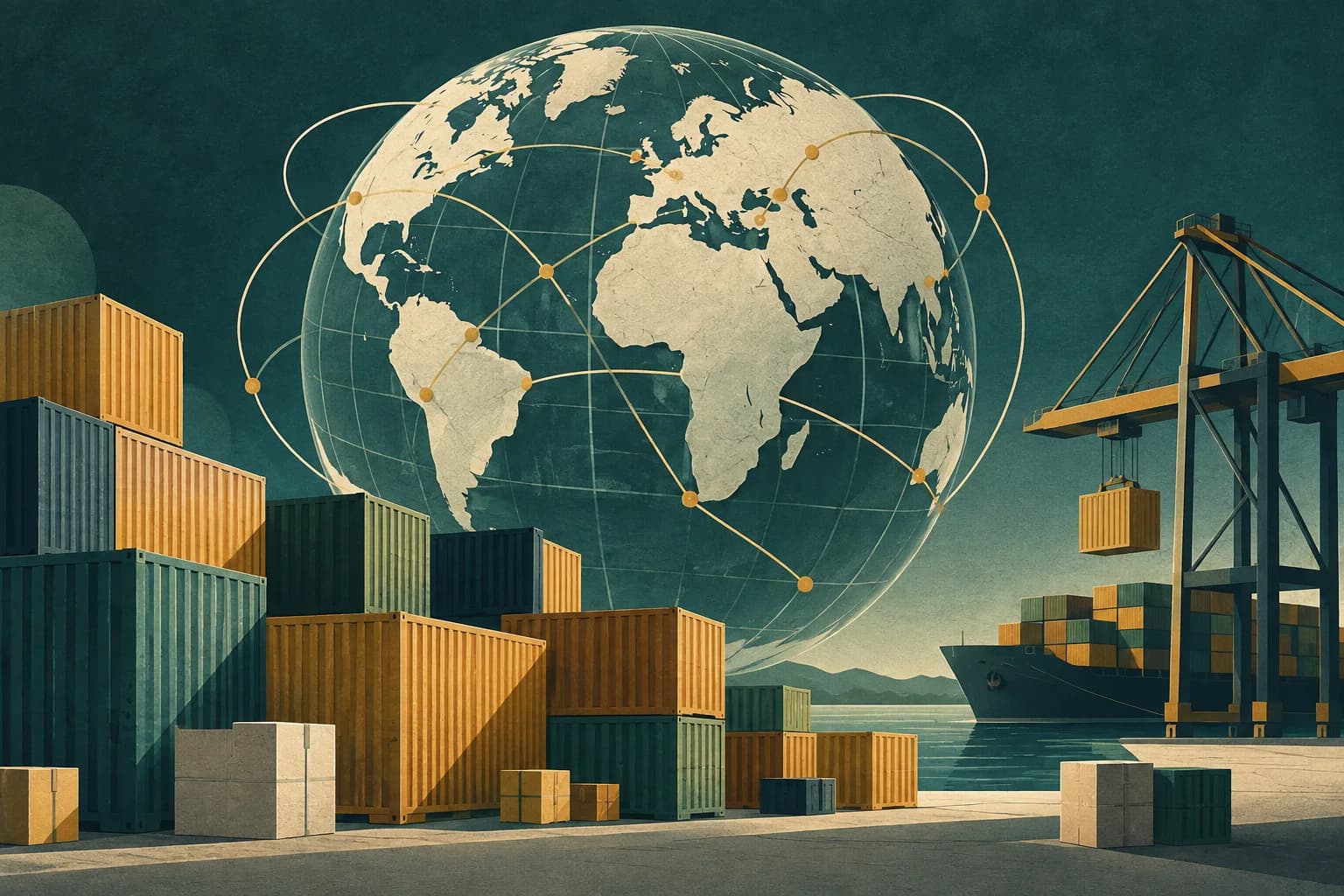
The Harmonized System, usually called the HS, is the global language customs authorities use to classify goods.
That sounds simple. Naturally, it is not.
An HS code is a structured numerical code used to identify what a product is for customs purposes. It sits behind duty rates, trade statistics, import controls, export controls, origin rules, quotas, anti-dumping measures, sanctions screening, excise treatment, licensing requirements, and a long list of other things that tend to appear only after somebody has already promised the customer delivery by Friday.
The HS comes from the World Customs Organization and is governed by the International Convention on the Harmonized Commodity Description and Coding System. It entered into force in 1988, because at some point the world accepted that describing traded goods through national lenses was probably not ideal.
The basic idea was sensible: create a common classification structure so that countries could speak the same customs language at least at a foundational level. A refrigerator, a bicycle, a cotton shirt, a semiconductor, a medical device, or a bag of frozen prawns should not have to begin its international journey as a philosophical debate in every country it enters.
The HS was built as a legal and logical structure. It is not just a list of product names. It is arranged in sections, chapters, headings, and subheadings. The code becomes more specific as the digits progress.
The first two digits identify the chapter.
The first four digits identify the heading.
The first six digits identify the HS subheading.
For example, in a simplified sense, the structure works like this:
Chapter: broad product family.
Heading: narrower group of goods within that chapter.
Subheading: more specific category within that heading.
This is why HS classification is not simply keyword matching. The structure reflects legal rules, section notes, chapter notes, heading terms, subheading terms, and General Interpretative Rules. In other words, the HS does not ask only, “What does the invoice call this product?” It asks, less politely, “What is this product legally, based on its material, function, form, composition, use, and position in the nomenclature?”
This distinction matters.
A product description might say “part,” “kit,” “accessory,” “machine,” “sample,” or the ever-popular “other.” The HS does not automatically believe it. Customs classification requires analysis. A product may be named one thing commercially and treated as something else legally. Customs authorities, as a general rule, are not moved by marketing language. This is one of their less charming but more useful qualities.
The elegant part is that the first six digits are internationally harmonized. That gives the world a shared baseline. In theory, countries using the HS should classify the same product under the same six-digit HS subheading.
In theory.
Then national and regional customs systems add their own layers.
The European Union builds on the HS with the Combined Nomenclature, which uses eight digits. For imports, TARIC then adds further detail to capture EU tariff and trade policy measures. The UK uses its own tariff structure after Brexit. The US uses the Harmonized Tariff Schedule. China, Canada, Japan, and other jurisdictions also extend the HS structure to meet their own tariff, statistical, regulatory, and policy requirements.
This is where the cheerful phrase “global trade” starts to develop symptoms.
The first six digits may be shared, but customs reality rarely stops there. The additional digits can determine the applicable duty rate, whether an anti-dumping measure applies, whether a licence is required, whether a quota is relevant, whether a product falls within a special regulatory regime, and whether the importer is about to receive a calm but deeply inconvenient question from customs.
So yes, the HS creates harmony.
Then each jurisdiction adds its own verse, tempo, and occasional experimental jazz section.
A product may be described consistently across markets, but its full import classification may not be identical. Measures may differ. Duty rates may differ. Additional documentation may differ. The same commercial item can create different compliance consequences depending on where it is imported, how it is used, where it originates, and which regulation is having a particularly active week.
This is also why the phrase “global HS code” needs careful handling. At six digits, there is an international foundation. Beyond that, there are national or regional extensions. A business that treats a ten-digit EU TARIC code, a UK commodity code, a US HTS code, and a Chinese tariff code as interchangeable is not harmonizing trade. It is preparing audit material.

Explore the classification layers
HS subheading
This is where AI becomes relevant, but not in the simplistic “press button, receive compliant classification” way that tends to make customs professionals quietly stare into the distance.
For AI, this distinction is critical.
An AI system that classifies goods must understand the difference between the international HS layer and the jurisdiction-specific layer. It must know when it is making a six-digit HS classification and when it is applying a national tariff schedule. It must also be capable of consulting and applying the relevant classification framework, including the General Rules for the Interpretation of the Harmonized System (GRIs), section notes, chapter notes, explanatory notes, Binding Tariff Information (BTI) decisions where relevant, customs rulings, and other jurisdiction-specific guidance. It must not pretend that one country’s extended code can simply be copied into another country’s declaration because the product looks the same and everyone involved is tired.
“Globally” does not mean “paste the same code everywhere and hope for diplomatic immunity.”
It means the system must start with the harmonized structure, then apply the correct jurisdictional extension, legal notes, measures, duty implications, documentation requirements, restrictions, and declaration requirements for the market in question.
Taking into account the complexity of the classification process, the financial impact of the decision, the legal requirements, the jurisdiction-specific rules, and the downstream consequences for duty, origin, controls, reporting, and audit defence, the obvious question is this:
Can you outsource your whole classification process to AI?
No.
Not unless your risk appetite has recently left the building.
Classification is still a compliance decision. The company remains accountable for the declaration, the supporting rationale, and the consequences if the code is wrong. AI can assist the process, but it should not become the invisible customs department nobody can question.
What businesses can do, however, is use AI to remove much of the heavy research burden from their teams.
A well-designed tool can collect product information, review technical descriptions, compare possible headings, identify relevant legal notes, check jurisdiction-specific extensions, flag missing data, structure the reasoning, and prepare a defensible classification file for expert review.
That is not outsourcing accountability.
That is using technology to make human accountability manageable.
The point is not to replace customs professionals with a black box. The point is to stop making skilled people spend their time hunting through tariff schedules, copying notes into spreadsheets, comparing near-identical headings, and rebuilding the same research trail every time a product changes slightly.
If AI can do the research groundwork, customs and trade teams can focus on the work where human judgment creates real value: reviewing risk, improving master data, strengthening controls, identifying FTA savings, supporting sourcing decisions, preparing for audits, improving broker instructions, reducing duty leakage, and fixing the processes that caused the classification problem in the first place.
That is a more realistic future for AI in customs.
Not autopilot.
Not blind trust.
Not “the system classified it, so we are done.”
A better model is AI-supported classification with human-owned decisions.
Less manual research. More structured evidence. Better use of specialist time.
And, ideally, fewer spreadsheets bravely pretending to be a compliance framework.