Customs operations
The Customs Cost Black Hole
8 min de lectură În engleză
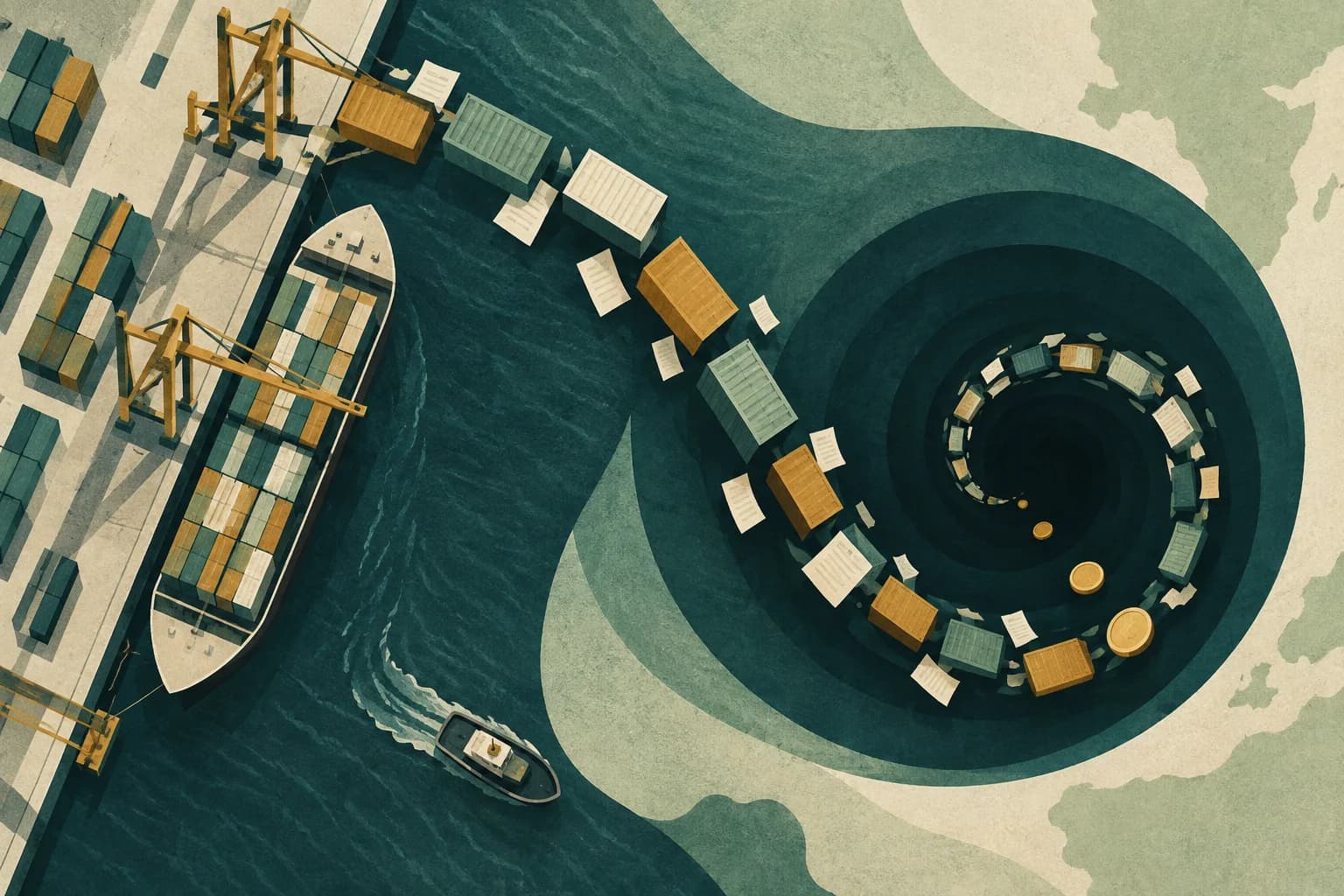
Because somehow, customs costs disappear exactly when you try to measure them.
Most companies have at least some visibility over direct customs costs.
Duties? Usually visible somewhere.
Import VAT? Usually recorded, although not always in a way anyone enjoys reconciling.
Brokerage fees? Painfully visible.
Random invoice line items with names like “administration surcharge,” “documentation fee,” or “please-do-not-ask-us-what-this-means fee”? Also visible, unfortunately.
But visible does not always mean useful.
In many companies, customs costs are recorded at shipment, broker, country, or entity level. That does not necessarily mean they are easy to connect back to the SKU, customs declaration line, product master data, supplier behavior, missing documentation, or the internal work required to fix the issue.
And that is where the customs cost black hole begins.
Because the cost is not only what appears on the customs declaration or broker invoice.
The cost is also the time your team spends trying to understand why the declaration does not match the SKU data, why the product description is vague, why the country of origin is missing, why the Incoterm is unclear, and why everyone is now trapped in an email thread called “URGENT clearance issue.”
Again.
The myth of the “simple customs query”
Let’s take a very normal, very boring, very dangerous example.
A shipment is waiting for clearance because the customs broker needs missing information.
No audit.
No penalty.
No dramatic legal crisis.
Just one small question.
Something like:
“What is the country of origin?”
Or:
“Can you confirm the Incoterm?”
Or the timeless classic:
“Please provide the product details.”
Which sounds innocent until you realize this “quick question” now requires a small cross-functional investigation.
The broker sends an email requesting missing information. That takes around 5 minutes to read, interpret, and quietly question your life choices.
Someone internally triages the request and decides who owns it. Another 2 to 4 minutes, assuming ownership is clear, which is adorable.
Your team contacts the vendor. Another 5 to 10 minutes.
Then someone asks for the missing Incoterm, place, product detail, certificate, origin statement, or whatever piece of information decided not to participate in the original documentation. Another 3 to 5 minutes.
Then everyone waits.
This waiting time is technically “non-value added,” which is corporate language for “nothing is happening, but it is still costing money.”
Then your team validates the product details, HS classification, and documentation. Another 10 to 20 minutes.
Then comes the compliance check.
Is CBAM applicable?
Any excise exposure?
Any certificates required?
Any additional controls?
Any dual-use concern?
Any special customs procedure?
Anything else quietly hiding in the regulatory bushes?
That can easily take another 10 to 25 minutes.
Then there are internal clarification loops. Another 5 to 15 minutes.
Finally, someone responds to the broker, often with partial data, because naturally the full answer is still somewhere between the vendor, the ERP system, the product master data, and a PDF attachment named “final_final_v3_corrected_NEW.pdf.”
The broker comes back with a follow-up.
Of course they do.
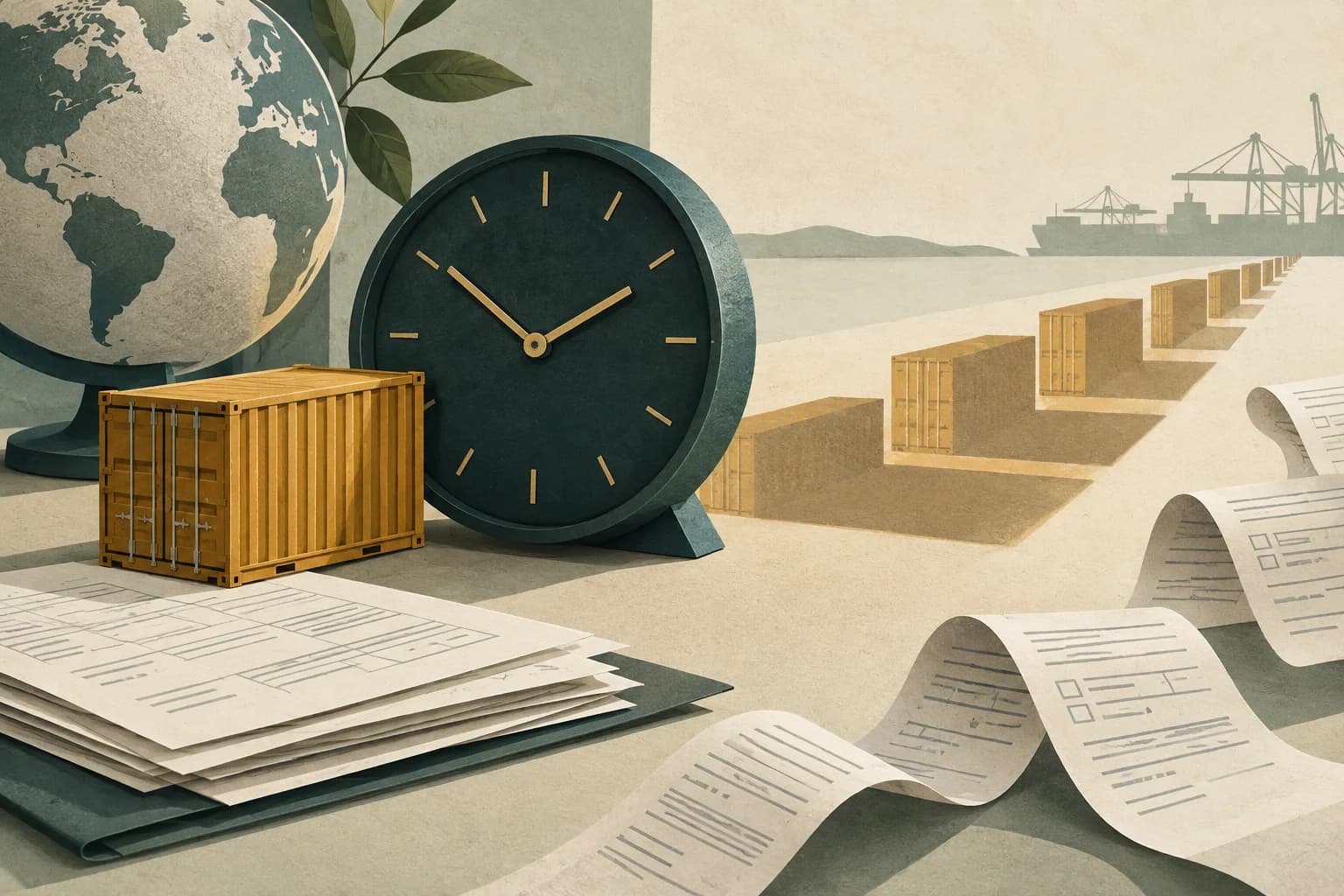
By the time this “simple customs query” is handled, you may have spent around 70 minutes of active handling time per shipment.
That excludes waiting time.
It excludes rework.
It excludes detention and demurrage.
It excludes the emotional damage caused by opening the same email thread 14 times.
Now multiply the pain
One customs query is annoying.
Hundreds are a process problem.
Thousands are a financial leak wearing a compliance badge.
Let’s scale those 70 minutes of handling time.
At 500 shipments per year, this becomes approximately 583 hours.
That is around 73 working days, or roughly 0.33 FTE.
At 1,000 shipments per year, you are looking at around 1,167 hours.
That is about 146 working days, or roughly 0.67 FTE.
At 10,000 shipments per year, the number becomes approximately 11,667 hours.
That is around 1,458 working days, or approximately 6.7 FTEs.
See how the time adds up
- Hours
- 583
- Working days
- 73
- FTE equivalent
- 0.33
And this is only administrative handling time.
Not customs duties.
Not import VAT.
Not brokerage fees.
Not penalties.
Not detention.
Not demurrage.
Not trucks waiting at borders.
Not containers sitting around like very expensive office decorations.
Just people chasing missing information.
The SKU versus customs declaration problem
One of the biggest blind spots is the gap between SKU-level data and customs declaration data.
Your business thinks in SKUs.
Customs authorities think in declaration lines, HS codes, country of origin, customs value, procedure codes, licenses, certificates, and regulatory controls.
When those two worlds do not connect cleanly, visibility becomes messy very quickly.
You may know what duties were paid on a declaration. But can you easily trace those costs back to the SKU, supplier, product family, country of origin, Incoterm, or master data issue that caused the problem?
If the answer requires three systems, two spreadsheets, one broker portal, and someone called Anna who “usually knows where this is stored,” then the process is not visible.
It is just familiar.
And familiar is not the same as controlled.
The hidden customs tax on your organization
Hidden customs costs are rarely dramatic on their own.
A missing Incoterm here.
An unclear product description there.
A vendor who provides country of origin only after three reminders.
A broker who asks a question your team has already answered in a different email chain.
A customs document that is technically complete but practically useless.
Individually, these issues look small.
Collectively, they become a system.
A very expensive system.
The problem is that these costs are distributed across teams and systems. They rarely sit in one budget line. They are absorbed silently by logistics, trade compliance, procurement, customer service, finance, vendors, brokers, and freight forwarders.
Nobody owns the full number.
So nobody sees the full number.
And because nobody sees it, nobody fixes it.
Very convenient. Very expensive.
The costs that do not show up neatly in finance reports
The obvious customs costs are easier to report.
But what about:
- Time spent correcting incomplete shipment data
- Time spent asking vendors for basic information
- Time spent validating classification and origin
- Time spent checking whether additional regulations apply
- Time spent reconciling broker questions with internal systems
- Time spent explaining the same requirement to the same supplier for the fifth time
- Time spent dealing with delays caused by documentation gaps
- Time spent managing detention and demurrage after preventable delays
- Time spent preparing explanations after something went wrong
These costs usually do not appear as “customs inefficiency” in financial reporting.
They appear as headcount pressure.
Operational delays.
Urgent emails.
Broker escalations.
Late deliveries.
Supplier frustration.
Compliance risk.
And everyone’s favourite corporate phrase: “business as usual.”
Customs visibility is not just about compliance
Many companies treat customs visibility as a compliance topic.
That is only partly true.
Yes, visibility helps reduce customs risk. It helps ensure correct classification, origin, valuation, documentation, and regulatory controls.
But visibility is also a cost control issue.
If you do not know where time is being spent, you cannot reduce it.
If you do not know which suppliers repeatedly provide poor data, you cannot improve supplier performance.
If you do not know which product categories trigger repeated broker questions, you cannot fix your master data.
If you do not know which customs processes generate the most rework, you cannot automate the right steps.
And if you do not measure the cost of back-and-forth, everyone will keep pretending it is free.
Spoiler: it is not free.
Your employees are not answering customs emails as a hobby.
What companies should start measuring
To understand the real cost of customs operations, companies should start measuring more than duties and broker invoices.
They should measure:
- How many customs queries are received per shipment, supplier, product group, and market
- How much active handling time each query requires
- How often missing data causes clearance delays
- Which data fields are most often incomplete or incorrect
- How often SKU-level data does not match customs declaration data
- How many broker follow-ups happen before clearance
- How often country of origin, HS classification, Incoterms, or certificates are missing or disputed
- Which suppliers repeatedly create documentation issues
- How often detention, demurrage, or waiting time is linked to customs data problems
- How much internal capacity is consumed by avoidable manual work
This is where the real customs cost picture starts to appear.
And no, “we have a spreadsheet somewhere” does not count as visibility.
How Palmyra helps
At Palmyra, we focus on making hidden customs costs visible, measurable, and reducible.
That means structuring customs data before it becomes a clearance problem.
It means helping companies connect SKU-level data with customs declaration requirements.
It means automating HS classification support and compliance checks.
It means flagging missing or inconsistent data earlier.
It means reducing unnecessary back-and-forth between internal teams, vendors, brokers, and freight forwarders.
It means helping companies understand where customs friction actually comes from, not just where the invoice lands.
Because by the time a truck is waiting, a broker is chasing, and five people are trying to confirm whether “metal part” is a valid product description, the cost is already happening.
The only question is whether you are measuring it.
Final thought
Direct customs costs are visible.
Hidden customs costs are operational.
And operational costs are very good at hiding in plain sight.
So the next time someone says, “It is just a quick customs question,” it may be worth asking:
How many times does this happen?
How long does it take?
Who is involved?
What delays does it create?
What does it cost at scale?
Because that “quick question” might not be quick.
And it is definitely not free.
At Palmyra, we help companies turn customs chaos into measurable, structured, and manageable workflows.
If your customs process runs on email chains, manual checks, and heroic last-minute problem solving, it is probably already costing more than you think.